Mary’s Promotion - Word Game
- 4.1
- Rating
- 1.00M
- Installs
- Free
- Price
 Analysis by App-foxy
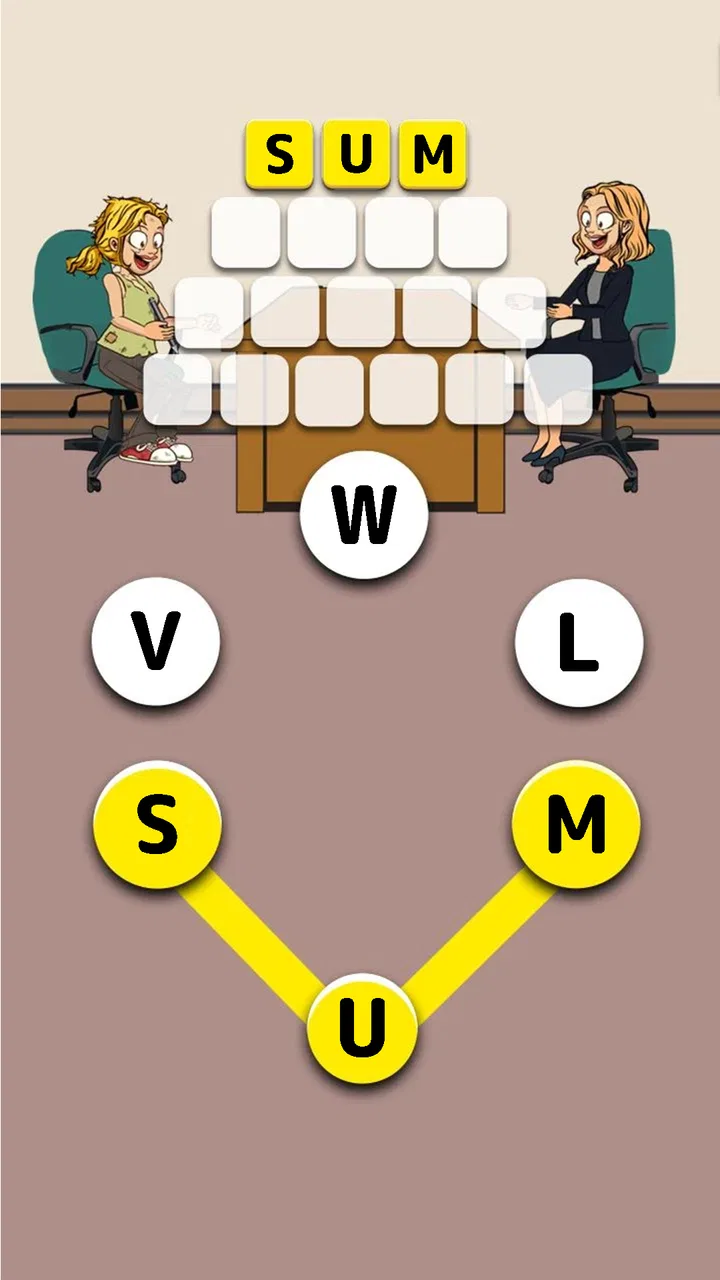
I enjoy word games that give me a reason to think beyond simply finding the next answer, and Mary’s Promotion takes that idea in a light, accessible direction. It is a free word game from Wonderful.Word built around Mary’s progress at work, with the store summary presenting the experience as a new job earned through words. That framing gives the puzzles a little more personality than a completely abstract letter board.
After spending time with it, I see the game as a relaxed choice for players who like vocabulary challenges but do not necessarily want a strict daily routine or a competitive leaderboard to stay interested. The central appeal is easy to understand: form words, keep moving through the game, and use each successful round as a small step toward Mary’s promotion. The presentation is simple, but that simplicity is also part of its strength.
Mary’s Promotion is listed as a Word game, and it is free to install. It has reached over a million installs and holds a 4.1 average from around nine thousand ratings, which suggests a substantial audience without making the game feel designed only for experts. It is rated Teen, so families should check whether its tone and presentation suit younger players before handing it over.
You May Also Like

 Blood Strike: 2.5 Anniversary
Blood Strike’s Loadouts Turn Every Drop Into a Tactical Gamble
A close look at Blood Strike’s custom loadouts: how fast access to signature weapons reshapes its battle royale rhythm, rewards preparation, and narrows the gap between fights.

 Pandora - Music & Podcasts
Pandora’s Music Is Easy to Start, but Harder to Recover
Pandora’s strength is its low-effort path from a seed to a station. Its weak spot is how much confidence it asks you to place in connection, setup, and quiet recovery.

 8 Ball Pool
 Is Built on Rivalries, Rematches, and Routine
A close look at the rivalries, rematches, shared routines, and unanswered safety questions that turn a quick pool match into a persistent mobile community.

 Samsung Music
’s Quiet Strength Is Playing What You Already Own
Its reach comes less from spectacle than from dependable access to a personal library. That simplicity is both the app’s strongest retention engine and its ceiling.

 AccuWeather: Weather Radar
AccuWeather Review: A Quick, Clear Forecast for Everyday Decisions
For everyday plans, the best forecast is the one you can understand quickly. AccuWeather makes rain timing, radar, and local conditions easy to act on, with a few trade-offs.

 Hill Climb Racing
Why Hill Climb Racing Still Turns Crashes Into One More Run
A tiny car, a bumpy hill and one more upgrade: Hill Climb Racing keeps resurfacing because its simple chaos makes every near-miss feel personal.
More From Our News Desk



How the basic word-game routine feels
The most useful way to approach this game is to treat each session as a short mental reset rather than a demanding study exercise. I open it when I have a few spare minutes, look at the available letters or puzzle prompt, and try to identify the obvious short words first. That initial pass is important because it helps reveal the less visible combinations without immediately turning the round into a guessing marathon.
My preferred workflow is deliberately repeatable. I scan from left to right, note familiar endings, then test common beginnings and plural forms. If a word looks possible but does not register, I move on instead of repeatedly forcing the same idea. Returning to the puzzle after finding several easier answers often makes the remaining spaces easier to see.
This is where the workplace theme helps. Progress feels more purposeful than a disconnected sequence of boards, even though the actual moment-to-moment activity remains a word puzzle. I do not need to understand a complicated story before playing, and I can stop after a short session without losing the basic rhythm of the game.
A realistic everyday use case is a commute or a waiting-room break. I can play one or two rounds, put the phone away, and come back later with a fresh view of the letters. That stop-and-start style suits Mary’s Promotion better than marathon play, especially when a puzzle has one stubborn answer that benefits from a mental pause.
The game is also a reasonable fit for people who enjoy casual vocabulary practice. I would not describe it as a replacement for a dictionary, a formal language course, or a serious spelling tool. It encourages recognition and experimentation, but the motivation is entertainment first. Players who want lessons, definitions, pronunciation help, or a detailed explanation of every accepted word should look toward a dedicated language app instead.
Building a practical solving habit
Experienced players can make the opening seconds more efficient by separating discovery from verification. During discovery, I quickly write possible word shapes in my head and avoid judging every attempt too early. During verification, I check whether the game accepts the strongest candidates and use the remaining gaps to narrow the search. Mixing those two stages tends to create circular guessing.
Another useful habit is to search by word length before searching randomly. Short words can expose letter combinations that appear in longer answers, while longer words often reveal a recognizable stem. I also pay attention to repeated letters and familiar endings such as common plural or verb patterns. These are not magic shortcuts, but they reduce the number of blind attempts.
When I am stuck, I do not immediately assume that the puzzle requires an unusual word. I first revisit ordinary possibilities that I skipped because they looked too simple. Word games often punish overthinking: a player may search for a rare term while overlooking a familiar word formed by a basic rearrangement.
This approach also makes the game more comfortable for mixed-skill groups. A confident player can focus on longer patterns, while someone less experienced can contribute by spotting short, common words. It is not a party game in the traditional sense, but the puzzle format is easy to explain to another person sitting nearby.
Settings and controls worth checking early
I recommend opening the available settings before settling into a long session. The most important reason is not to hunt for a secret advantage, but to make sure the presentation feels comfortable on your phone. Check the sound, notification behavior, and any display or interaction options that are available in your build. A word game should be easy to read and easy to pause, especially when played in public.
Settings matter because they shape the game’s role in your day. If I am playing during a quiet break, I prefer not to have unnecessary audio competing with the surroundings. If I am at home, sound can make the experience feel more active. Adjusting those basics before playing prevents small annoyances from becoming a reason to abandon the game.
I also suggest checking how the game handles mistaken taps and navigation. Word puzzles depend on a clean input rhythm, and an accidental action can be more frustrating than a difficult clue. Taking a moment to learn where the back or pause controls sit gives me more confidence to play quickly later.
There is a practical trade-off here. Players who want a completely distraction-free puzzle may find that a minimal interface suits them better than a themed game. On the other hand, people who enjoy a little context around their word solving may appreciate the sense of progression connected to Mary’s work story. The right choice depends on whether atmosphere or pure efficiency matters more to you.
I would not promise that changing settings will transform the difficulty. Settings are best viewed as comfort and control tools, not as a substitute for solving ability. The most effective improvement still comes from developing a consistent search order and learning when to stop forcing a bad guess.
Faster patterns that save time without spoiling the fun
My fastest improvement came from treating letters as building blocks instead of isolated symbols. I look for familiar pairs and endings first, then ask which words can grow from them. For example, spotting a common two-letter combination can point toward several longer possibilities, while a repeated letter may rule out certain patterns before I waste time testing them.
I also use a two-pass method. On the first pass, I collect every answer that appears immediately. On the second, I examine what those answers have in common. If several words share a beginning, ending, or letter position, that pattern can guide the remaining search. This is more reliable than tapping through combinations at random.
A less obvious tip is to protect your attention. If I spend too long on a single empty space, I stop seeing the letters objectively. I switch to another part of the puzzle, look for a shorter answer, or briefly leave the screen. The return often produces the missing word faster than another minute of stubborn repetition.
Players who use the game as a daily habit can keep a small mental note of recurring mistakes. I often overlook words because I assume the answer must be long, or because I search only in one grammatical form. Recognizing that personal bias is more valuable than memorizing isolated solutions, since it improves performance across later puzzles.
There is also a useful distinction between speed and quality. Racing through every board may feel satisfying, but it can make the game tiring if the goal is relaxation. I prefer to use faster patterns when I am short on time and a slower exploratory approach when I want the game to function as a quiet break. The same puzzle supports both moods, provided I do not turn every round into a test.
Where the game reaches its limits
Mary’s Promotion is not the best choice for every word-game player. If you want competitive rankings, extensive multiplayer interaction, or a large set of language-learning explanations, its simpler structure may feel limited. Players who prefer cryptic clues, deep strategy, or highly unusual vocabulary may also find the experience too gentle.
The free entry point is appealing, but in-app purchases range from under a dollar to almost a hundred dollars per item. That is a wide range, so I would recommend checking each purchase carefully before confirming anything. Anyone sharing a device with children should use the platform’s purchase controls and avoid treating the free download as a promise that every optional item will be free.
The current version is 2.0.4, and the game supports devices running Android 6.0 or later. That makes it accessible to many older Android phones, although actual comfort will still depend on screen size, performance, and how clearly the interface appears on a particular device. I would check compatibility before planning to install it on an especially old handset.
The Teen content rating is another reason to consider the intended audience rather than assuming that every word game is automatically suitable for children. The rating does not change the basic puzzle appeal, but parents should make their own decision based on the game’s presentation and the device’s purchase settings.
Another limitation is motivational. The promotion theme gives the puzzles a recognizable wrapper, but it will not keep everyone engaged forever. If you need a constantly changing social challenge, a daily word app with a shared result may be more compelling. If you want a calm solo activity with a light narrative frame, this game makes more sense.
I also would not choose it as my only vocabulary tool. It can encourage flexible thinking and help me notice word patterns, but it is not designed to explain why a word is correct or to build a structured learning path. For serious language improvement, I would pair it with reading, a dictionary, or a course rather than expecting the game to do all the work.
Who will get the most from it
I think Mary’s Promotion works best for casual players who enjoy word formation, short sessions, and a little progress framing. It is especially suitable for someone who finds completely abstract word boards dull but does not want a complicated story-driven game. The workplace setting gives each round a modest sense of direction without requiring the player to manage an elaborate character system.
It can also suit returning players who like developing personal routines. The game rewards a calm scan, a second pass, and the willingness to leave a difficult space alone temporarily. Those habits make the experience feel more thoughtful than simple trial and error, even though the controls remain approachable.
I would suggest skipping it if your priority is a pure dictionary experience, detailed educational feedback, or intense competition. In those cases, a more specialized word app will probably serve you better. I would also be cautious if you dislike optional purchases or prefer games that explain their progression in depth before you begin.
For me, the best comparison is not with a full language-learning platform but with other casual word puzzles. Mary’s Promotion has an advantage over a bare letter grid because Mary’s career goal gives the session a bit of identity. Its disadvantage is that players seeking more systems, social features, or rigorous instruction may quickly want something broader.
My verdict after making it part of a routine
My recommendation is positive, with clear expectations. Mary’s Promotion is a free, approachable word game that benefits from a steady solving method more than from frantic tapping. I enjoy its short-session format and the way the promotion theme gives ordinary word finding a simple reason to continue.
The strongest way to play is to check the controls first, begin with obvious words, search by length and familiar patterns, and step away briefly when one answer becomes a mental block. Those habits make the game smoother without inventing shortcuts that remove the puzzle itself. They also help reveal whether the game’s level of challenge matches your preferences.
Wonderful.Word has made something that is easy to start and reasonably satisfying to revisit. It is not a deep vocabulary course or a competitive word arena, and its optional purchase range deserves attention. Still, for a player who wants a casual solo challenge with a light career theme, I would happily recommend giving it a try.
In the end, I see Mary’s Promotion as a good companion for spare moments rather than a game that demands your entire evening. If you like finding patterns, enjoy gradual progress, and appreciate puzzles that let you pause without pressure, it is worth considering. If you need rich explanations, multiplayer competition, or advanced wordplay, choose a more specialized alternative instead.
FAQs for Mary’s Promotion - Word Game
01What is Mary’s Promotion - Word Game?
Mary’s Promotion - Word Game is a casual word puzzle designed around solving vocabulary challenges and helping Mary advance in her career. During the game, you usually form words from a selection of letters, complete levels, and progress through a light story or promotion-themed structure. It is aimed at players who enjoy short, relaxing puzzles rather than fast action or complex strategy.
02How do you play Mary’s Promotion - Word Game?
The main gameplay involves examining the available letters and creating valid words by connecting or arranging them. Completing the required words lets you clear a level and unlock further challenges. Some stages may include bonus words, objectives, or progressively harder letter combinations. The controls are generally simple, making the game suitable for quick sessions on a phone or tablet.
03Is Mary’s Promotion - Word Game free to download and play?
Mary’s Promotion - Word Game can generally be downloaded without an upfront purchase, although the exact availability and pricing may depend on whether you use Android or iOS. Like many free puzzle games, it may include optional in-app purchases, advertisements, or both. Before installing, check the store listing for current information about paid items, advertising, and any subscription-related conditions.
04Does Mary’s Promotion - Word Game require an internet connection?
The basic word puzzles may be playable without a constant internet connection, which is useful when traveling or when mobile data is limited. However, some features can depend on online access, including advertisements, purchases, synchronization, updates, leaderboards, or promotional content. Because requirements can change after updates, it is best to test the game offline after installation rather than assuming every feature will work without internet.
05Who will enjoy Mary’s Promotion - Word Game, and is it suitable for children?
This game is a good choice for players who like vocabulary exercises, casual progression, and short levels that can be completed at their own pace. It may also appeal to people looking for a relaxing alternative to action-oriented mobile games. Parents should still review the store age rating, advertising, in-app purchase settings, and privacy information before allowing children to play, since these details may vary by device and region.
Pros
- Simple word puzzles are easy to learn and suitable for casual play.
- Short rounds make it convenient for quick gaming sessions.
- Progressive challenges can help maintain interest over time.
- The game offers a relaxing alternative to more action-focused titles.
- Offline access may make it useful when traveling or without mobile data.
Cons
- Some puzzles may feel repetitive after extended play.
- Difficulty balance can vary between individual levels.
- Hints or extra attempts may be limited without in-game resources.
- Small screens can make longer words harder to review comfortably.
- Players seeking competitive multiplayer may find the experience limited.

Mary’s Promotion - Word Game
Gallery